Lightweight vs. Rich: How to Know Which Face Serum Your Skin Needs Right Now
There is a moment most women know well, standing in front of a shelf of serums, reading the promises on each bottle, and still walking away uncertainly. Not because the options are few. Because there are too many.
The question is never really which brand. It is: what does my skin actually need right now?
This guide cuts through the noise. If you have ever wondered whether to reach for a lightweight face serum or a richer, denser formula — this is your answer.
What Is a Face Serum, and Why Does It Matter?
A face serum is a concentrated, fast-penetrating formula designed to deliver active ingredients deeper into the skin than a moisturiser can. Where a moisturiser seals and protects the surface, a serum works beneath it, targeting specific concerns like dehydration, dullness, enlarged pores, or uneven tone.
The texture of your serum is not just a preference. It is a function. And choosing the wrong one for your skin type or the current season can leave your skin congested, stripped, or simply underwhelmed.
Lightweight Face Serums: What They Are and Who They Are For
A lightweight face serum is water-based, fast-absorbing, and leaves no residue. It layers easily under SPF or moisturiser and rarely overwhelms the skin.
Best suited for:
-
Oily or combination skin types
-
Humid or monsoon climates (think: most of India, most of the year)
-
Women experiencing clogged pores, excess shine, or skin congestion
-
Those who prefer a minimal, intentional routine
In warm, humid conditions, your skin is already producing more sebum. A heavy serum adds to that load — clogging pores, creating a greasy film, and potentially triggering breakouts. A lightweight formula, by contrast, delivers what the skin truly needs: hydration, not heaviness.
Key ingredients to look for in a lightweight face serum:
-
Sodium Hyaluronate — a smaller molecular form of hyaluronic acid that penetrates deeper and locks moisture in without sitting on the skin
-
Niacinamide — controls oil, minimises pore appearance, and strengthens the skin barrier
-
AHA Fruit Extracts — gently exfoliate dead cells, refine texture, and keep pores clear
-
Vitamin C — brightens from within and defends against environmental damage
These are not filler ingredients. They are active, and the best lightweight serums combine them with precision, not volume.
Rich Face Serums: What They Are and Who They Are For
A rich or dense face serum typically has an oil-based or emollient-heavy formula. It feels more nourishing on application and takes longer to absorb.
Best suited for:
-
Dry or mature skin types
-
Cold, dry climates or winter months
-
Skin that feels persistently tight, flaky, or compromised
-
Women undergoing hormonal changes that have stripped the skin's natural oils
In these conditions, the skin's lipid barrier is often depleted. A richer serum replenishes that barrier, reduces moisture loss, and supports skin that has genuinely been starved of nourishment.
Key ingredients to look for in a rich face serum:
-
Squalane, rosehip, or marula oil
-
Ceramides and fatty acids
-
Peptides for barrier repair and firmness
-
Retinol (for evening use, particularly in dry or mature skin)
The Honest Mistake Most Women Make
Switching to a richer serum because their skin "feels dry" in humid weather.
Here is what is actually happening: humidity causes increased sweat and sebum production. The skin can simultaneously be dehydrated (lacking water) and oily (overproducing oil). Reaching for a heavier serum in this state makes things worse — not better.
The solution is a lightweight hydrating face serum that floods the skin with water-binding ingredients rather than occlusive oils. Your skin feels plump, balanced, and comfortable — without congestion.
How to Read Your Skin (Not the Label)
Before choosing a face serum, ask yourself these four questions:
-
What is the weather like where I live? Hot and humid calls for lightweight. Cold and dry calls for the rich.
-
How does my skin feel an hour after cleansing? Tight and flaky = dry. Shiny and congested = oily or combination.
-
What specific concern am I targeting? Dullness, pores, dehydration, fine lines — each points to different activities.
-
What does my routine currently look like? A rich moisturiser on top of a rich serum is often too much. Balance matters.
Why the Hydrashot Serum Was Built for Right Now
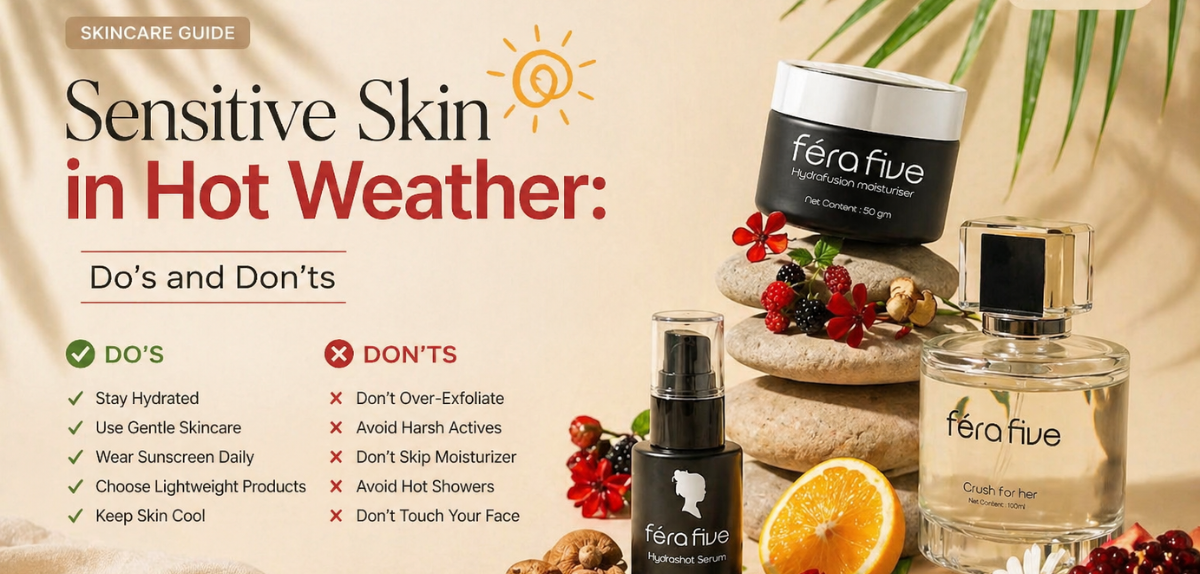
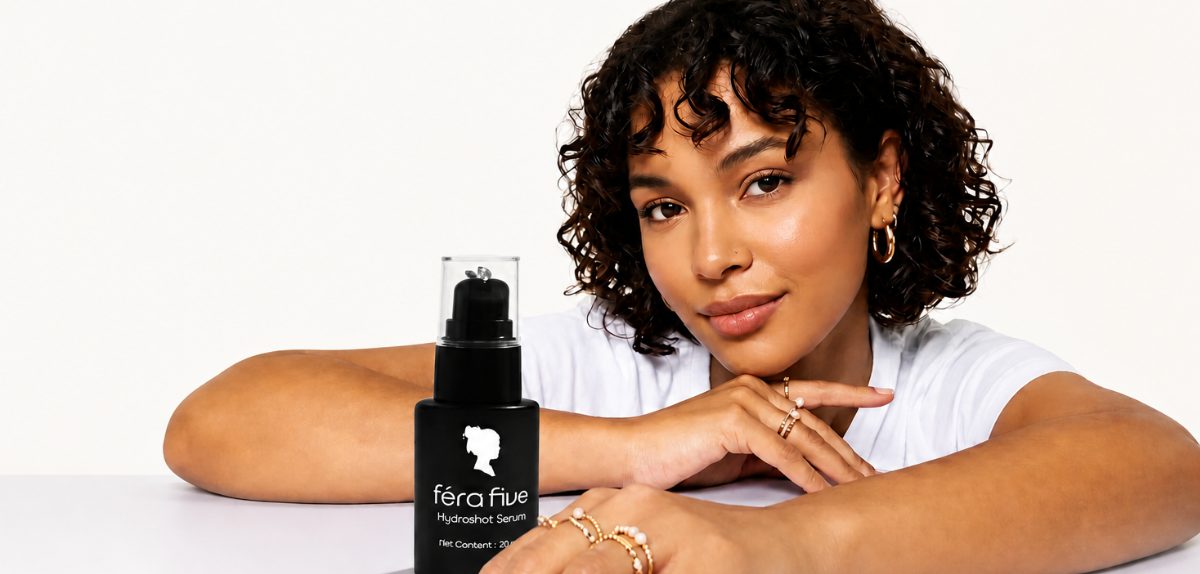
The FéraFive Hydrashot Serum was formulated specifically for women who live in warm, humid conditions and want an intentional — not excessive — skincare ritual.
It is a concentrated hydration formula absorbed in seconds, delivering active hydration deep into the skin without sitting on the surface. Niacinamide minimises pores and controls excess oil. AHA Fruit Extract gently clears and refines. Sodium Hyaluronate locks in moisture and smooths. Vitamin C brightens from within.
Two to three drops. Morning and night. That is all it asks — and everything it gives back.
No heaviness. No residue. No unnecessary steps. Just skin that is balanced, clear, and cared for.
FAQs: Face Serum, Answered Simply
Q1: Can I use a face serum every day?
A: Yes. Most lightweight face serums, especially those formulated with hydrating and barrier-supporting ingredients, are designed for daily use, morning and night. Start with once daily if you are introducing a new formula and observe how your skin responds.
Q2: Should I apply face serum before or after moisturiser?
A: Always before. Serums are designed to penetrate the skin first, delivering activities to deeper layers. Your moisturiser then seals everything in. Think of it as: serum first, moisturiser second, SPF last.
Q3: Can I use a face serum if I have sensitive skin?
A: Yes, but choose formulas with calming, well-tolerated activities like Niacinamide and Sodium Hyaluronate, and avoid high concentrations of exfoliating acids until your skin has adjusted. Patch test first.
Q4: Is a face serum a replacement for moisturiser?
A: In humid climates, a good lightweight serum may be sufficient on its own for some skin types, particularly during warmer months. However, if your skin still feels tight after your serum absorbs, layer a light, non-comedogenic moisturiser on top.
Q5: How long before I see results from a face serum?
A: Hydration and surface smoothness can be visible within days. Longer-term results, improved tone, reduced pore appearance, brighter complexion, typically become noticeable with consistent use over four to six weeks.
Q6: Can I use both a lightweight and a rich serum in the same routine?
A: Only if your skin has genuinely different needs in the morning versus the evening. A lightweight, brightening serum in the morning and a richer, repair-focused serum at night is a layering strategy some women use effectively. But for most people, one well-chosen face serum is enough.